

Are home prices dropping in Colorado Springs, CO?
Colorado Springs Real Estate, Home Prices Colorado, Housing Market Trends
Are Home Prices Dropping in Colorado Springs, CO?
If you are watching Colorado Springs real estate and wondering whether home prices are finally dropping, you are not alone. After years of rapid appreciation and intense bidding wars, many buyers and sellers are asking the same question: is the market cooling, or are prices simply leveling off?
The Short Answer: Prices Are Easing, Not Crashing
Looking at the latest data through mid‑2026, home prices in Colorado Springs have softened from their peak, but they are not in free fall. Instead, the market is shifting into a more balanced phase where both buyers and sellers have reasonable leverage.
Several reputable sources show slightly different numbers, but they tell a similar story. Clever’s late‑May data puts the median sale price around $547,017, with a median list price near $560,961. Other trackers, like Redfin and HousingData.report, show median sale prices in the mid‑$400,000s and report modest year‑over‑year declines of roughly 1–4%. Taken together, these figures suggest that while the frenzy has cooled, Colorado Springs real estate remains relatively strong and stable.
How Today’s Prices Compare to Recent Years
To understand whether home prices Colorado Springs residents see today are “dropping,” it helps to zoom out. During the pandemic boom years, prices in many Front Range markets surged at double‑digit rates. That pace was never sustainable. What we are seeing in 2026 is more of a reset and plateau than a steep decline.
Redfin reports a median sale price around $445,000 for the three months ending April 2026, down about 4.3% year over year.
HousingData.report shows a February 2026 median near $473,030, roughly 1.5% lower than the prior year.
GreatColoradoHomes notes a May 2026 median around $499,952, actually up about 2% from May 2025.
These mixed signals are typical in a transitioning market. Some price segments and neighborhoods are flat or slightly down; others continue to post small gains. Overall, the trend for housing market prices Colorado Springs is best described as stabilizing near the mid‑$400,000s to low‑$500,000s, not tumbling back to pre‑pandemic levels.
Inventory, Days on Market, and What They Signal
Prices never move in a vacuum. To understand where Colorado Springs real estate is headed, it is important to look at inventory and days on market—two key housing market trends that shape buyer and seller behavior.
Realtor.com reports a 27.1% jump in active listings and a 14.6% increase in new listings year over year as of spring 2026.
Houzeo estimates about 1.18 months of supply and an average of roughly 52 days on market in May 2026.
GreatColoradoHomes shows days on market around 43 days and a 2.9‑month supply, pointing toward a more balanced environment than the ultra‑tight conditions of a few years ago.
In practical terms, this means buyers have more choices and a bit more time to make decisions, while sellers can no longer count on multiple offers within 24 hours unless their home is priced and presented exceptionally well. Homes still sell for about 98–99% of list price, according to Clever and Houzeo, which reinforces that this is not a distressed market—just a normalizing one.
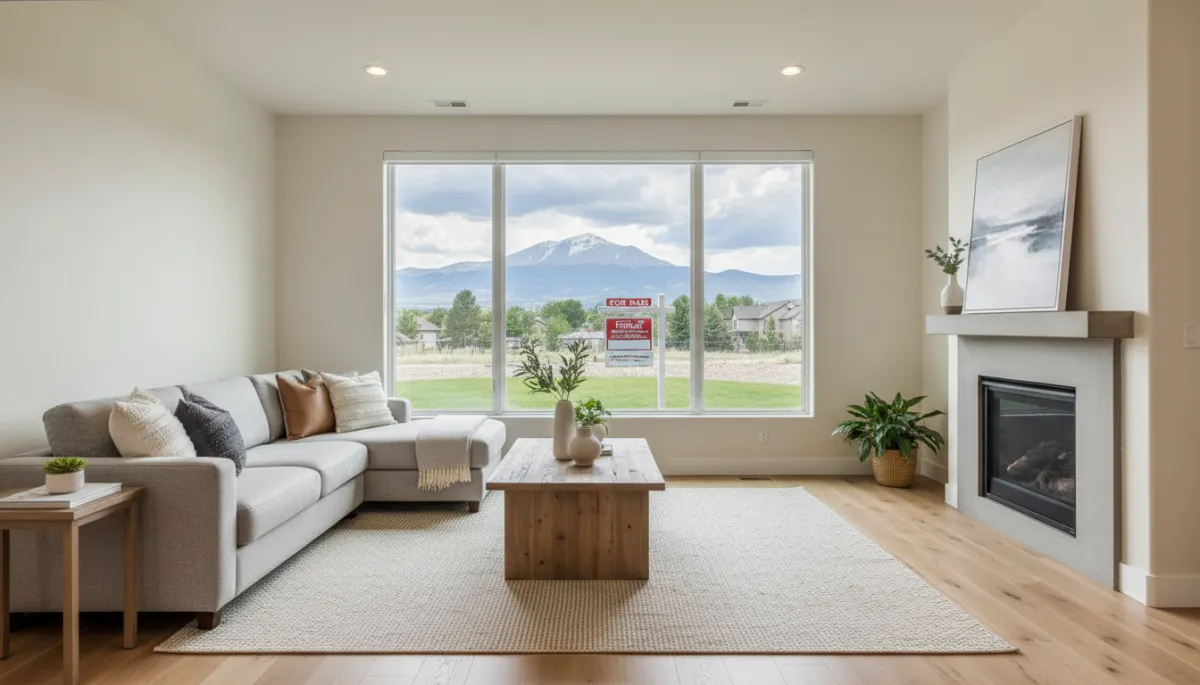
Well-priced, well-presented homes still close near asking price in today’s market.
Which Parts of the Market Are Softening the Most?
Not every price bracket moves in lockstep. Local brokerages and market updates note that demand remains solid below roughly $700,000, while higher‑priced segments are seeing more noticeable slowdowns. In other words, the most pronounced easing in home prices Colorado Springs homeowners may notice is often in the upper‑end and luxury tiers, where buyers have more negotiating power and listings can sit longer.
Mid‑range homes in established neighborhoods, especially those close to military bases, job centers, and outdoor amenities, continue to attract steady interest. These properties may experience flat to slightly positive price growth in 2026, aligning with forecasts from The Johnson Team and Houzeo, which call for roughly 0–4% appreciation over the year.
Economic and Population Forces Supporting the Market
One reason a sharp drop in Colorado Springs real estate values appears unlikely is the region’s underlying economic and demographic strength. Between July 2024 and July 2025, Colorado Springs added about 2,288 residents, more than any other city in Colorado, according to Axios. El Paso County also grew by around 4,700 people over the same period, even as national migration slowed.
At the same time, forecasts suggest the broader Colorado economy will grow modestly, and mortgage rates are expected to remain elevated but not sky‑high. That combination—steady population growth, slow but positive economic expansion, and gradually improving inventory—supports a scenario where home prices Colorado buyers face are more likely to flatten or inch up than to plunge.
What This Means If You Are Buying in 2026
For buyers, the current housing market trends in Colorado Springs offer a rare middle ground. You are no longer competing in the extreme seller’s market of 2021–2022, but you are also not shopping in a weak or distressed environment. Here is how to use that to your advantage:
Take time to compare neighborhoods. With listings up more than 25% in some reports, you can explore different parts of the city—from downtown condos to newer communities on the north and east sides—without rushing an offer overnight.
Negotiate beyond just price. Because homes are taking 35–52 days to sell on average, you may be able to negotiate closing costs, inspection items, or move‑in dates, even if the seller is firm on price.
Focus on long‑term value. With forecasts pointing to flat or modest appreciation, prioritize homes that fit your lifestyle and budget for several years rather than speculating on quick gains.
What This Means If You Are Selling in 2026
Sellers in Colorado Springs still have solid opportunities, but strategy matters more than ever. With buyers becoming more selective and appraisers keeping a close eye on recent sales, overpricing is risky. Here are a few practical takeaways from today’s Colorado Springs real estate landscape:
Price realistically from day one. Most homes are closing within 1–2% of list price, which means the initial price needs to match current market reality, not last year’s headlines.
Invest in presentation. With more inventory on the market, professional photos, thoughtful staging, and minor repairs can make your listing stand out and support a stronger sale price.
Be prepared to negotiate. Buyers may ask for concessions, especially on homes that have been listed longer than average or in higher price brackets. Flexibility can help you secure a solid offer without drastic price cuts.
Looking Ahead: Housing Market Trends Through the Rest of 2026
Most forecasts for the Colorado Springs housing market suggest more of the same: stability with a slight upward tilt. The Johnson Team expects flat to roughly 3% price gains, while Houzeo projects 2–4% appreciation and a gradual increase in inventory. Local outlets like the Colorado Springs Gazette also anticipate a largely flat year with potential late‑year improvement, barring major economic shocks.
For both buyers and sellers, that means the window of opportunity is open now. Buyers can step into a balanced Colorado Springs real estate market without the panic of recent years, and sellers can still achieve healthy prices by aligning closely with current data and buyer expectations.
Final Takeaway: Are Home Prices Dropping in Colorado Springs?
So, are home prices dropping in Colorado Springs, CO? The most accurate answer is that prices have eased slightly from their highs and are now stabilizing. Median values vary by source—from the mid‑$400,000s to low‑$500,000s—but across the board, the data points to a balanced, neutral market rather than a boom or a bust.
If you are considering a move, pay close attention to neighborhood‑level housing market trends, not just citywide averages. Partnering with a local real estate professional who tracks Colorado Springs real estate day by day can help you interpret the numbers, price correctly, and negotiate confidently—whether you are buying your first home, moving up, or cashing out equity in this evolving, but still resilient, market.